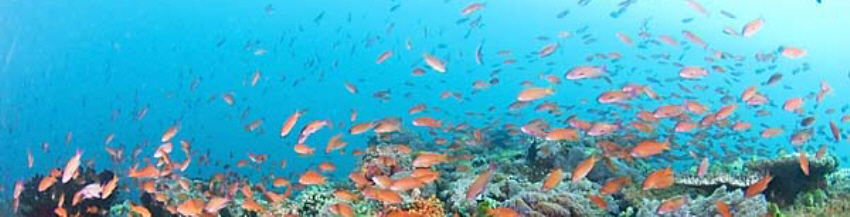
Reefs and coral gardens
Fish, coral heads, and an easy place to practice buoyancy. This is where intro dives and newer certified divers usually go.
 Anilao Diving and Resorts
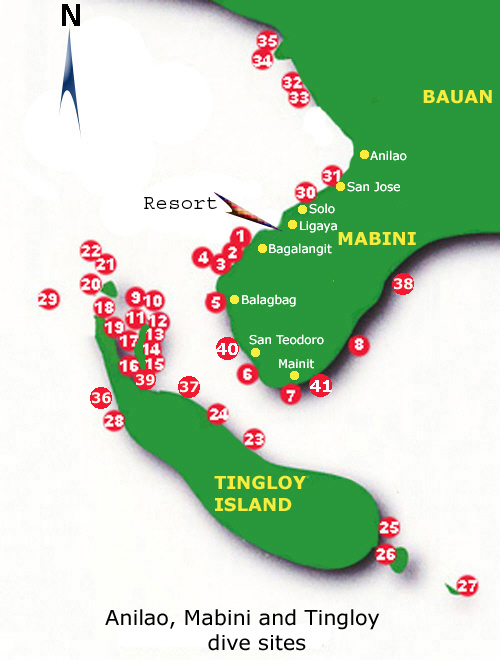
Anilao, Mabini, and Tingloy
Currents, wind, and what you want to see change the plan. A new diver and a photographer can be on the same coastline and have completely different dives. That is normal here.
Fish, coral heads, and an easy place to practice buoyancy. This is where intro dives and newer certified divers usually go.
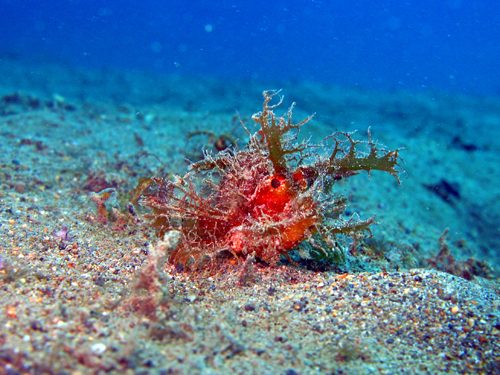
Sandy and rubbly bottoms hide frogfish, nudibranchs, shrimps, and other small animals. Slow diving. A guide who knows the spots makes the difference.
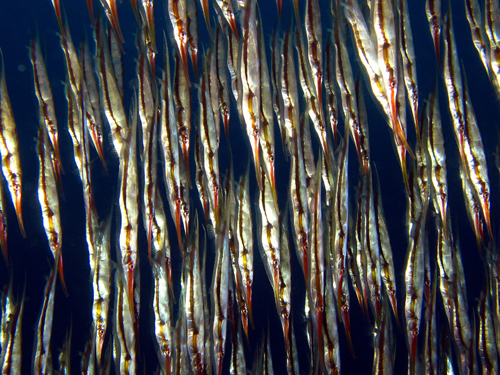
After sunset the reef changes. Blackwater is different again: you hang in dark open water and watch tiny drifting animals. It is for divers who are already comfortable at night.
Some sites also have wreckage, including a sunken barge at Twin Rocks, and debris at Darilaut. They are part of the story of the bay, not a reason to touch anything.
Look, don't touch. Coral breaks, and animals stress when they are handled. We keep a respectful distance, especially for close-up photos.